Cloudy water after a storm, orange staining around fixtures, a sulfur smell from the tap, or scale building up on appliances are not problems to ignore. A well water filtration system can address many of these concerns, but only when it is selected for the water coming from your specific well. The right equipment starts with testing, then matches treatment, flow capacity, plumbing layout, and ongoing maintenance to the property.
For homeowners on private wells, water treatment is not a one-size-fits-all purchase. Conditions can vary from one road to the next, and even a long-serving well can change after heavy rain, nearby construction, pump work, or seasonal groundwater changes.
Start With a Water Test Before Choosing Equipment
Water can look clear and still contain contaminants that require treatment. It can also look discolored or smell unpleasant because of minerals that are more of a plumbing and appliance concern than an immediate health concern. A proper water test separates those issues, which prevents installing a system that solves the wrong problem.
A useful test should assess the concerns identified at the property. Depending on the situation, that may include bacteria, iron, manganese, hardness, pH, turbidity, nitrates, sulfur compounds, and total dissolved solids. If there are local environmental concerns or a known issue near the property, additional testing may be appropriate.
Testing is especially worthwhile when a home has a new well, a recent flood, a change in taste or odor, recurring staining, or unexplained stomach illness. Bacterial testing should also be completed after well repairs or work that opens the water system. A treatment professional can use the results to recommend equipment based on measured conditions rather than assumptions.
What a Well Water Filtration System Can Treat
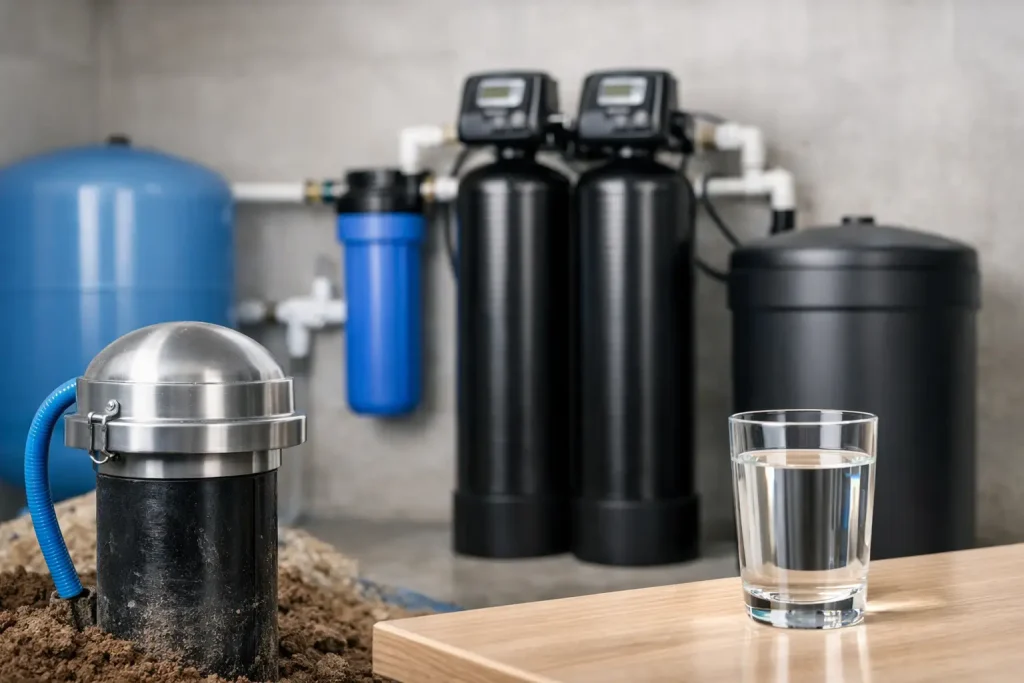
Most complete systems use more than one treatment stage. The arrangement depends on what is in the water and how the household uses it. A family with several bathrooms, a large tub, and laundry running daily has different flow needs than a small seasonal property.
Sediment and turbidity
Sand, silt, and fine debris can make water look cloudy, clog fixtures, damage valves, and shorten the life of other treatment equipment. A sediment filter is often the first stage because it protects everything downstream. It may be a cartridge filter or a larger backwashing filter, depending on how much material is present and how often the problem occurs.
Iron, manganese, and sulfur odor
Iron often leaves red, orange, or brown staining in toilets, sinks, and laundry. Manganese can create darker staining, while hydrogen sulfide can produce a rotten-egg smell. These issues may require oxidation, filtration media, aeration, or a dedicated iron and sulfur treatment unit.
The treatment method matters. A basic filter may reduce some staining but fail to keep up with higher iron levels or changing water conditions. Correctly sized equipment helps avoid recurring odor, poor water pressure, and premature filter fouling.
Hard water
Hard water contains minerals, usually calcium and magnesium, that create scale on faucets, shower doors, water heaters, and appliances. A water softener is not the same as a filtration system, but it is often part of a whole-home water treatment plan. Softening can improve soap performance, reduce scale buildup, and help protect plumbing fixtures and water-using equipment.
A softener should be sized for the household’s hardness level and water use. An undersized unit may regenerate too often or allow hard water to break through during busy periods.
Taste, odor, and specific contaminants
Carbon filtration can improve certain tastes and odors. Reverse osmosis systems are commonly used at a dedicated drinking-water tap when test results call for a higher level of dissolved-contaminant reduction. UV disinfection may be recommended where bacteria is a concern, but it works best with clear water. Sediment and other particles can shield microorganisms from UV light, so pre-filtration is often necessary.
No single device handles every issue. For example, UV does not remove iron, and a softener does not disinfect water. The system has to be built around the tested water quality and the home’s priorities.
Size the System for Your Home, Not Just the Well
Treatment equipment needs enough capacity to supply water without creating a noticeable drop in pressure. This is where plumbing knowledge becomes as important as the treatment components themselves.
A contractor should consider the well pump’s output, pressure tank operation, incoming pipe size, number of bathrooms, fixture demand, irrigation use, and whether the property has separate living areas. A filter that is too restrictive can make an existing low-pressure complaint worse. A system with inadequate media capacity may work briefly, then struggle during high-demand periods.
The physical installation also needs planning. Many systems require a nearby drain for backwashing or regeneration, a reliable electrical supply, shutoff valves, bypass piping, and enough clearance for service. In colder Eastern Ontario properties, equipment must be protected from freezing. The mechanical room, basement, utility area, or well room should be organized so technicians can replace filters, inspect valves, and service the well equipment safely.
For homes with a well pump, pressure tank, water heater, softener, and filtration equipment in one area, coordinated installation can prevent a common problem: one new component blocks access to another critical system. SDR Electric, Plumbing & Heating Inc. can assess how water treatment fits with the property’s plumbing, power, and well equipment rather than treating it as an isolated add-on.
Plan for Maintenance From the Beginning
Every well water treatment system needs maintenance. The exact schedule depends on the equipment, water quality, and household water use. Cartridge filters need changing, UV lamps need periodic replacement, softeners need salt, and backwashing equipment needs inspection to confirm valves and drain connections are working properly.
Neglected maintenance can reduce water flow, allow odors or staining to return, and leave a homeowner unsure whether the equipment is still doing its job. Keep a simple record of filter changes, service visits, water-test results, and any changes in water appearance, smell, or pressure. Those details make troubleshooting faster if a problem develops.
Retesting is also sensible after major well or plumbing work, a flood event, or a significant change in water quality. For private wells, periodic bacteria testing remains a practical safeguard even when a treatment system is already installed.
Signs Your Current Treatment May Need Attention
A system does not have to fail completely before it needs service. Watch for reduced water pressure, new staining, an odor that returns after treatment, unusual cycling of equipment, salty or untreated-tasting water, or water that bypasses the system unexpectedly. Leaks around filter housings, valves, drain lines, or plumbing connections should be addressed promptly.
If the home has no water, low water pressure throughout the house, or a pump that runs continuously, the issue may involve the well pump, pressure tank, pressure switch, or plumbing supply rather than filtration alone. Separating water-quality symptoms from water-supply symptoms helps ensure the right repair is made.
A properly selected system should make daily water use easier, not add uncertainty to it. Start with current water test results, leave room for service, and choose equipment that can handle the way your household actually uses water. That approach protects the plumbing system and gives you a clearer path to dependable water at every tap.