A hot shower on a bitterly cold morning can make a water heater easy to take for granted. Until it cannot keep up, starts leaking, or shuts down altogether. Asking the right water heater maintenance questions to ask this winter can help you catch problems early, protect your home from water damage, and make a clear decision about service, repair, or replacement.
For homeowners, landlords, and property managers, winter adds pressure to every plumbing system. Cold incoming water makes your heater work harder, while a utility-room leak or failed relief valve can become a larger problem quickly. A qualified plumbing inspection focuses on the condition of the equipment, its safety controls, and the surrounding connections – not just whether hot water is still coming from the tap.
Water Heater Maintenance Questions to Ask This Winter
Is my water heater operating safely?
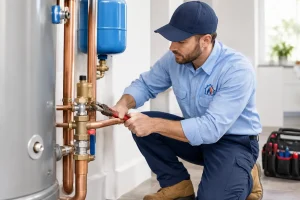
Start with safety. Whether your home has an electric, gas, propane, or tankless water heater, the system needs to operate within its designed temperature and pressure limits. Ask a plumbing professional to inspect the temperature and pressure relief valve, often called the T&P valve, and the discharge pipe connected to it.
That valve is a critical safeguard. It is designed to release water if temperature or pressure inside the tank becomes unsafe. The discharge pipe should terminate safely near the floor and should not be capped, plugged, or altered in a way that prevents the valve from doing its job. If you see water near the pipe, do not ignore it. The cause could be excess pressure, overheating, or a valve that no longer seals properly.
For gas-fired equipment, ask whether the venting, combustion air, burner operation, and gas connections appear safe and serviceable. For electric models, ask whether the electrical disconnect, wiring, and heating components show signs of wear or overheating. These are not areas for trial-and-error homeowner repairs.
Is sediment affecting the tank or hot-water supply?
Hard water and naturally occurring minerals can leave sediment at the bottom of a storage-tank water heater. Over time, that buildup can reduce heating efficiency, create rumbling or popping sounds, and put added stress on the tank and heating components.
Ask whether flushing the tank is appropriate for your specific unit. The answer depends on the water heater’s age, maintenance history, water conditions, and visible condition. A controlled flush can be useful preventive maintenance, but aggressively disturbing heavy buildup in an older, neglected tank may reveal an existing weakness or create a new leak. A professional can assess the situation rather than treating every tank the same way.
If your property uses a well or has water treatment equipment, mention it during the service visit. Water quality can influence sediment accumulation, corrosion, fixture performance, and the maintenance needs of multiple plumbing systems.
Are there signs the tank is corroding or nearing failure?
A water heater can still produce hot water while the tank is approaching the end of its useful life. Ask about rust around pipe connections, moisture at the base of the unit, corrosion on valves, and staining on the floor or drain pan. Small leaks deserve attention because they can worsen without much warning.
Another useful question is whether the anode rod should be inspected. This component helps protect the inside of many tank-style water heaters from corrosion. Its condition can provide useful information about tank wear, although access and replacement options vary by model and installation.
If corrosion is limited to a fitting or valve, repair may be practical. If the tank itself is leaking, replacement is usually the safer path. Tank leaks do not repair reliably, and waiting can expose finished spaces, stored belongings, or adjacent mechanical equipment to water damage.
Is the thermostat set correctly for winter use?
Households often turn up the water heater thermostat when the weather gets cold because incoming water is colder and showers feel less hot. Before adjusting anything, ask whether the current temperature setting is appropriate for your household and equipment.
Water that is too hot raises scalding risk, especially for children, older adults, and anyone with reduced sensitivity. Water that is too cool can be uncomfortable and may not meet the needs of the building. The correct setting depends on the appliance, household use, mixing valves, and local requirements. A plumbing professional can confirm safe operation and investigate the real cause if hot water runs out too quickly.
Short hot-water supply is not always a thermostat issue. It may point to a failed heating element in an electric tank, a burner or control problem in a gas unit, sediment buildup, a damaged dip tube, or a water heater that no longer matches the household’s demand.
Why is my hot water discolored, noisy, or inconsistent?
Changes in water quality or water-heater performance are worth discussing before they become an emergency. Ask what may be causing rusty, cloudy, or foul-smelling hot water, especially when cold water appears normal. The source could be corrosion in the heater, sediment, bacteria associated with certain water conditions, or an issue elsewhere in the plumbing system.
Noises matter, too. Popping, banging, hissing, or rumbling can indicate mineral buildup, a heating problem, or pipe movement. Some sounds are minor, while others call for prompt inspection. Giving the technician clear details helps: Does the sound occur only during heating? Is it new? Does it happen at one fixture or throughout the home?
Inconsistent temperatures can also be caused by cross-connections, aging fixtures, recirculation components, or mixing valves. This is where a coordinated plumbing assessment is useful. The water heater may be part of the problem, but it is not always the entire answer.
Questions About Winter Protection and the Surrounding Area
A water heater is only as reliable as the area around it. Ask whether nearby water lines are protected from freezing, whether the drain pan and drain route are in good condition, and whether there is enough clearance for safe service. Storage piled against a water heater can block access, conceal leaks, and create risks around gas-fired equipment.
If the heater is in a garage, basement, crawlspace, or seasonal property, ask whether the room stays warm enough during a cold snap. Exposed pipes, condensate lines, and nearby plumbing fixtures may need attention even if the water heater itself is functioning normally. A frozen pipe can restrict water flow and cause damage when it thaws.
For tankless water heaters, winter questions should include freeze protection, venting condition, condensate drainage, and whether the unit has been serviced according to the manufacturer’s requirements. Tankless systems do not store water in a large tank, but they still need routine care and can be affected by scale, flow issues, and freezing conditions.
What Should I Watch for Between Service Visits?
You do not need to take apart your water heater to stay alert. A quick visual check every month or two can help you identify a change early. Look for these signs and arrange qualified service if you notice them:
- Water pooling, dampness, rust stains, or a musty odor near the unit
- New noises while the water heater is running
- Hot water that turns rusty, smells unusual, or runs out faster than expected
- A relief valve discharge pipe that is dripping or releasing water
- A pilot light, burner, electrical control, or display that is behaving differently
Do not cap a leaking relief line, disconnect safety components, or attempt gas and electrical repairs yourself. If a leak is active, water is near electrical equipment, or you smell gas, treat the situation as urgent and take the appropriate safety steps before arranging professional help.
When Is It Time to Plan an Upgrade?
Maintenance can extend the useful life of a water heater, but it cannot reverse tank corrosion or correct equipment that is no longer suited to the property. Ask whether your current unit is appropriately sized for the number of occupants, bathrooms, appliances, and peak-use periods in your home or building.
A replacement may be worth planning when repairs become frequent, hot water is consistently inadequate, the tank shows corrosion, or a renovation changes the property’s demands. The best choice depends on available fuel, electrical capacity, venting, space, hot-water habits, and plans for the property. A larger project may also involve electrical upgrades, plumbing changes, water treatment equipment, or mechanical-room reorganization.
For properties in Brockville and throughout Leeds and Grenville, SDR Electric, Plumbing & Heating can help assess these connected systems with one local, licensed team. The goal is not to replace equipment prematurely. It is to give you a practical picture of what is safe, what needs attention now, and what should be planned before the next cold-weather failure.
A water heater rarely chooses a convenient time to fail. A few focused questions this winter can turn an uncertain appliance into a manageable maintenance plan – and help keep hot water available when your household needs it most.