A dead bathroom, kitchen, garage, or outdoor outlet is often caused by one small safety device doing its job. Knowing how to reset tripped GFCI protection can restore power quickly, but only when the device resets normally and there is no continuing electrical hazard.
A GFCI, or ground-fault circuit interrupter, is designed to shut off power when it detects electricity taking an unintended path. That can happen when moisture, a damaged cord, a failing appliance, or a wiring problem creates a ground fault. The sudden loss of power is inconvenient, but it can prevent a serious shock.
What a tripped GFCI looks like
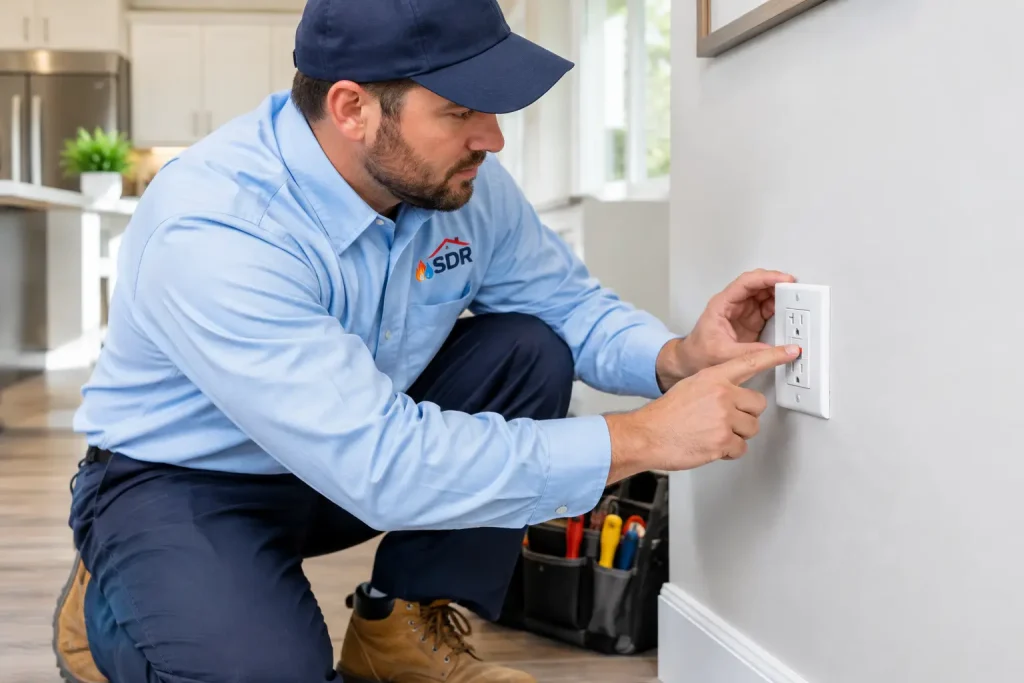
Most GFCI receptacles have two buttons between the plug openings: TEST and RESET. When the device trips, the reset button may sit outward, and any outlets protected by that GFCI can lose power.
The GFCI outlet that controls the problem is not always the outlet that stopped working. One unit may protect several regular-looking outlets farther along the same circuit. For example, a GFCI in a garage may protect exterior receptacles, or a bathroom GFCI may protect another bathroom outlet nearby.
Before resetting anything, look for obvious signs of danger. Do not touch an outlet that is wet, warm, cracked, discolored, buzzing, or smells like it is burning. Leave the circuit off and arrange professional electrical service instead.
How to reset tripped GFCI protection safely
Start by unplugging devices from the outlet that has tripped and from any nearby outlets that may be on the same circuit. This is especially worthwhile if the circuit was powering a portable heater, hair dryer, power tool, refrigerator, sump pump, dehumidifier, or outdoor equipment. A damaged appliance or cord can cause the GFCI to trip again as soon as it is reset.
Next, locate the GFCI receptacle. Check bathrooms, kitchens, laundry rooms, garages, unfinished basements, utility rooms, exterior outlets, and areas near sinks or water equipment. Press the RESET button firmly until it clicks into place.
If power returns, test the outlet before reconnecting equipment. Press the TEST button. The outlet should shut off. Then press RESET again to restore power. A GFCI that will not trip during a test, or will not reset afterward, needs attention from a qualified electrician.
Once it is working, reconnect devices one at a time. If the GFCI trips after a particular device is plugged in, stop using that device until it has been inspected or replaced. Do not keep resetting the outlet to force equipment to run.
If the reset button will not stay in
A GFCI reset button that immediately pops out usually means there is still a fault, there is no power reaching the receptacle, or the GFCI itself has failed. The right next step depends on what you find.
First, check your electrical panel for a tripped breaker. A breaker may look nearly normal when it trips, so move the suspect breaker fully to the OFF position before turning it back ON. If the breaker trips again immediately, leave it off. Repeated breaker trips point to an overload, short circuit, ground fault, or equipment issue that should be diagnosed rather than repeatedly reset.
If the breaker is on but the GFCI will not reset, make sure the area is dry and all connected loads are unplugged. Moisture inside an exterior box, a wet extension cord, or water around a bathroom or utility-room receptacle can prevent a safe reset. Give the area time to dry only if there is no active leak and no sign of damaged wiring. Never open an electrical box or remove the outlet cover while the circuit is energized.
An older GFCI can also wear out. These devices contain internal components that eventually fail, and some newer models include an indicator light to show replacement is needed. Replacement is not a cosmetic repair. The new device must be correctly wired, rated for the circuit, and tested, especially when it protects downstream outlets.
Find the GFCI that is actually controlling the outlet
When one outlet has no power and its own face has no test and reset buttons, do not assume the receptacle itself is defective. It may be protected by another GFCI upstream.
Check all GFCI locations in the home, including spots that seem unrelated to the affected outlet. An exterior outlet may be tied to a garage circuit. A basement outlet may be protected by a GFCI near a laundry sink. In some homes, a GFCI breaker in the panel provides the protection rather than a receptacle.
If you find a tripped GFCI and it resets successfully, return to the dead outlet and check it again. If several outlets remain dead after every accessible GFCI has been reset, the issue may involve a failed connection, a tripped breaker, a damaged receptacle, or a wiring fault. That is the point to stop troubleshooting at the homeowner level.
Why GFCIs trip in the first place
Not every trip means the electrical system has a major problem. GFCIs are sensitive by design. They monitor the current flowing out and returning through a circuit, then shut power off very quickly if there is an imbalance that could indicate current is flowing through water, metal, or a person.
Common causes include a damp outdoor receptacle, condensation around a garage outlet, a worn appliance cord, a damaged extension cord, an aging freezer or refrigerator, a sump pump with a motor issue, or a faulty bathroom device. Construction dust, insects, loose outdoor covers, and water entering an exterior electrical box can also create trouble.
The timing of the trip offers useful clues. If it happens during heavy rain, focus on outdoor outlets, landscape equipment, and exterior boxes. If it happens only when a particular appliance runs, that appliance is a strong suspect. If it trips with everything unplugged, the wiring, receptacle, or a hardwired item on the circuit may need professional testing.
Avoid these common reset mistakes
Do not bypass GFCI protection by replacing the device with a standard outlet, using an adapter, or running a permanent extension cord from another room. That may restore power, but it removes protection where moisture and shock risks are often highest.
Do not hold the reset button in, tape it down, or continue resetting a device that trips repeatedly. A GFCI is reporting a condition that deserves attention. Repeated resets can energize damaged equipment or wiring long enough to create a greater hazard.
Also avoid relying only on a non-contact voltage tester to decide that an outlet is safe to repair. These testers can be useful screening tools, but they do not replace proper electrical testing or safe isolation procedures. Electrical diagnosis requires the right equipment and training, particularly where line and load wiring, shared circuits, or panel work are involved.
When to call a licensed electrician
Call for electrical service if the breaker will not stay on, the GFCI will not reset with all loads unplugged, or the outlet trips repeatedly without a clear cause. You should also get help if there is evidence of heat, smoke, arcing, water damage, loose outlets, damaged wiring, or corrosion.
A prompt service call is especially important when the circuit supplies equipment your property depends on, such as a sump pump, well pump controls, freezer, water treatment equipment, or outdoor safety lighting. Temporary workarounds can create a larger problem, particularly during wet weather or when a pump system is needed most.
For homes across Eastern Ontario, SDR Electric, Plumbing & Heating can help identify whether the issue is a failed GFCI, a problem appliance, moisture intrusion, a circuit fault, or a broader electrical repair need. A proper diagnosis addresses the reason for the trip instead of simply restoring power for the moment.
Quick questions homeowners ask
Can I reset a GFCI while something is plugged in?
You can, but unplugging everything first is safer and makes troubleshooting more useful. If the GFCI resets with nothing connected but trips when one device is restored, you have a clear reason to inspect that device or its cord.
Why is my GFCI outlet green but the outlet has no power?
Indicator light meanings vary by manufacturer. A green light can indicate normal protection on one model, while another model may use lights differently. Test the outlet using its TEST and RESET buttons, then have it checked if the device does not behave as intended.
Does a tripped GFCI always mean water is present?
No. Water is a frequent cause, but failing appliances, damaged cords, wiring defects, and a worn-out GFCI can create the same result. The pattern of when it trips helps narrow down the cause.
A GFCI should be easy to reset once the underlying condition is gone. If yours resists a normal reset or keeps shutting off, treat that as useful safety information and have the circuit checked before putting it back into regular use.