A tripped breaker on Christmas Eve is frustrating. A warm extension cord, damaged light string, or overloaded outlet can be much more serious. These Christmas electrical safety tips Ontario homeowners can use are designed for the realities of seasonal decorating: older homes, cold weather, outdoor displays, and more devices plugged in than usual.
Start With Lights You Can Trust
Before installing holiday lights, lay each string out and inspect it in a well-lit area. Look for cracked insulation, loose sockets, frayed wires, missing bulbs, corrosion, or plugs with bent prongs. If a string has visible damage, do not tape it up and put it back into service. Replace it.
Use lights that are rated for where you plan to install them. Indoor lights are not built to handle rain, snow, ice, or temperature changes outside. Outdoor-rated lights are generally fine for exterior decorating, but they should still be installed where plugs and connections stay protected from standing water.
LED holiday lights are a practical choice because they use far less power and run cooler than older incandescent strings. They can reduce the load on a circuit, especially when several decorations are running at once. That said, LEDs still need proper cords, connections, and a suitable power source.
Christmas Electrical Safety Tips for Ontario Weather
Winter weather creates conditions that deserve extra attention. Snow buildup, melting ice, and wind can pull on cords or allow moisture into poorly protected connections. Keep outdoor plugs and extension-cord connections off the ground and protected with a weather-resistant cover designed for exterior use.
Run cords where they will not be pinched by doors, windows, deck railings, or other surfaces. A cord that is crushed or repeatedly bent can develop damage inside the insulation, even if it appears fine from the outside. Do not staple, nail, or screw through a cord to hold it in place.
When hanging lights on the roofline, use clips made for that purpose rather than metal fasteners. Work from a stable ladder on dry, firm ground, and keep clear of overhead electrical lines. If the decorating plan requires working close to a service mast, utility connection, or other electrical equipment, step back and have a qualified professional assess the situation.
Avoid Overloading Outlets and Circuits
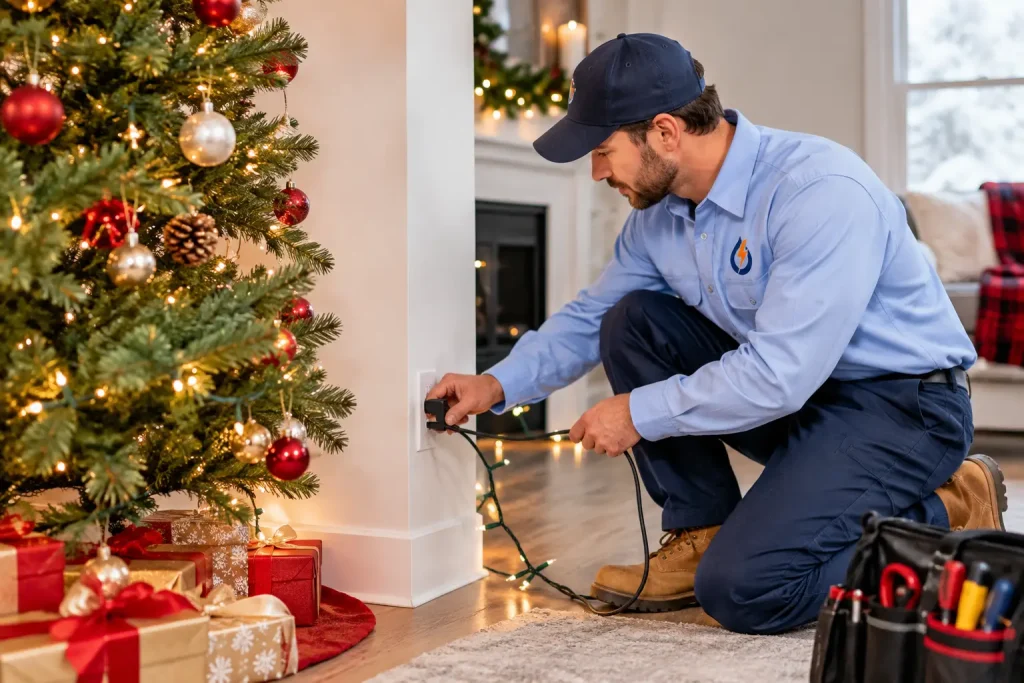
The most common holiday electrical problem is trying to power too much from one outlet. A power bar is not a solution for a circuit that is already carrying a heavy load. It simply gives more devices access to the same circuit.
Pay attention to what else is running in the room. Space heaters, electric fireplaces, kitchen appliances, entertainment systems, and holiday lights can add up quickly. If a breaker trips, do not keep resetting it and hoping it holds. That is a warning that the circuit may be overloaded or that there may be another electrical issue that needs attention.
Follow the manufacturer’s instructions for connecting light strings end to end. The maximum number varies by product type and bulb style. Avoid connecting power bars or extension cords to one another, a practice often called daisy-chaining. It can create overheating and fire risks, particularly when cords are hidden behind furniture or under rugs.
Use Extension Cords as Temporary Equipment
Extension cords are useful for seasonal decorating, but they are not permanent wiring. Choose a cord rated for the location and load, with an outdoor-rated cord for exterior displays. A heavier-duty cord may be needed for larger decorations, but bigger is not always better. The cord and the device must be compatible, and the circuit still has a limit.
Keep cords visible and away from walkways whenever possible. Do not run them under carpets, through walls, or across driveways. Indoors, unplug lights before changing bulbs, adjusting a tree, or leaving home for an extended period. Outside, disconnect decorations before performing snow removal or maintenance around the display.
Give the Tree and Decorations Enough Clearance
A natural tree becomes more combustible as it dries out. Keep it well watered and position it away from fireplaces, heating vents, portable heaters, and candles. Use tree lights that are in good condition, and turn them off before bed. A timer can help, provided it is rated for the equipment and location where it is used.
Decorations should never block electrical panels, smoke alarms, carbon monoxide alarms, or exits. This matters during gatherings, when more people are moving through the home and quick access is essential. Test smoke and carbon monoxide alarms before holiday guests arrive, especially if you are using fireplaces, gas appliances, or backup heating equipment.
Know When to Call an Electrician
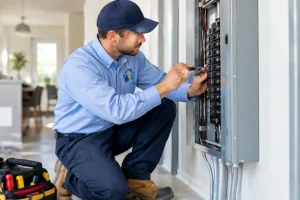
Some warning signs should not wait until after the holidays. Call for electrical service if you notice repeated breaker trips, outlets that feel warm, buzzing sounds, burning odors, flickering lights, sparking plugs, or water near an outlet or electrical connection. Turn off power to the affected area if it can be done safely, and avoid using that equipment until it has been checked.
For homeowners planning a larger outdoor display, adding exterior outlets, dedicated circuits, or permanent landscape lighting can be a safer long-term answer than relying on temporary cords each year. SDR Electric, Plumbing & Heating can help identify practical upgrades that fit the home and the way your family uses it.
A few minutes spent checking lights, cords, outlets, and alarms can keep holiday decorating where it belongs: festive, reliable, and safely enjoyed by everyone in the home.