A toilet that keeps running can be easy to ignore at first. You may hear a faint hiss after flushing, notice the tank refilling every few minutes, or find that the sound never stops at all. If you are asking, “why does toilet keep running?” the answer is usually inside the tank – and the issue can waste a surprising amount of water if left alone.
In many cases, a running toilet is a straightforward repair involving a worn seal, a misadjusted fill valve, or a problem with the flush mechanism. The right fix depends on where the water is going. A quick look inside the tank can often narrow it down, but a persistent leak, damaged parts, or water outside the fixture calls for a qualified plumbing repair.
How a Toilet Tank Is Supposed to Work
After you flush, the flapper or flush valve seal lifts to let water leave the tank and enter the bowl. As the tank empties, the fill valve opens and refills it. Once the water reaches the proper level, a float tells the fill valve to shut off.
A running toilet means one of those parts is not completing its job. Either water is escaping from the tank into the bowl, so the fill valve keeps replacing it, or the fill valve is allowing too much water into the tank. Knowing which situation you have matters because the repairs are different.
Why Does a Toilet Keep Running After It Fills?
When a toilet seems to fill normally, stop, then start filling again later, the most likely problem is a leak from the tank into the bowl. The toilet is not actually flushing on its own. Water is slowly slipping past a seal, lowering the tank level until the fill valve turns back on.
A worn or dirty flapper
The flapper is the flexible rubber or silicone seal at the bottom of many toilet tanks. It must sit flat against the flush valve opening after every flush. Over time, flappers can harden, warp, crack, collect mineral buildup, or become coated with residue from in-tank cleaning products.
A damaged flapper may still look like it is in place, but even a small gap can let water leak into the bowl. This is one of the most common reasons for intermittent refilling.
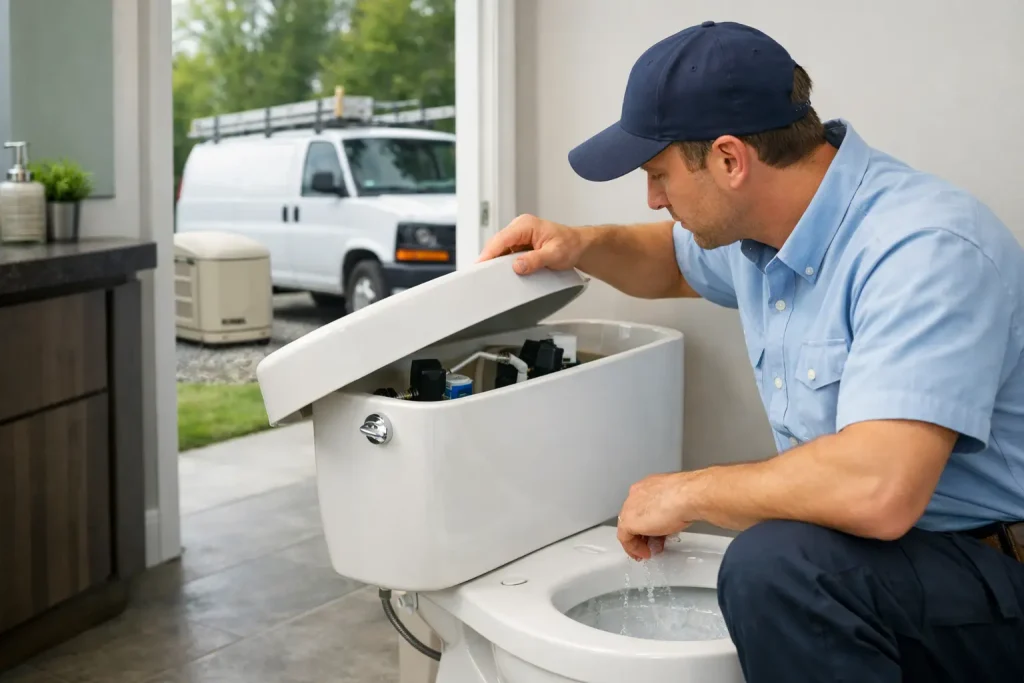
Lift the tank lid carefully and flush once. Watch the flapper as the tank refills. It should settle evenly over the opening. If it hangs up, folds over, or closes too slowly, it may need adjustment or replacement. Also check the chain connecting the flush handle to the flapper. A chain that is too short can hold the flapper slightly open. A chain that is too long can get caught under the seal.
A leaking flush valve seal
Some newer toilets use a tower-style flush valve rather than a traditional flapper. These systems use a circular seal at the base of the flush valve. If that seal becomes worn, dirty, or misaligned, water can pass into the bowl in the same way it would with a failed flapper.
The symptom is similar: the tank fills, then the fill valve turns on again without anyone flushing. The repair may involve replacing the seal or servicing the flush valve assembly. Because parts vary by toilet model, forcing an incorrect replacement can create a bigger leak or prevent the toilet from flushing properly.
A simple dye test can confirm a tank leak
If you cannot see an obvious issue, a dye test is a practical check. Add several drops of food coloring to the tank water, then avoid flushing for about 15 to 20 minutes. If colored water appears in the bowl, water is leaking past the flapper, seal, or flush valve.
Do not use the test if the bowl is already discolored from a cleaning product, and do not leave dye sitting for hours. The goal is simply to confirm where the water is traveling.
When the Fill Valve Is Causing the Problem
If water runs continuously into the tank or you hear a steady hissing sound, the fill valve may be failing or incorrectly adjusted. This valve is connected to the water supply line below the tank and controls how much water enters after a flush.
The water level is too high
Inside the tank is an overflow tube, usually a vertical plastic tube near the center. Water should stop below the top of that tube. If the tank water rises high enough to spill into it, the toilet will keep running because excess water is being sent into the bowl.
Look for a small stream or ripple of water entering the overflow tube. If you see one, the float may be set too high or the fill valve may not be shutting off reliably. Many fill valves have an adjustment screw or clip that lowers the water level. Follow the manufacturer’s directions for the specific valve rather than making large adjustments all at once.
A worn fill valve will not shut off
Fill valves contain moving internal components that can wear out, especially in toilets that see heavy use. Sediment and mineral deposits can also interfere with the valve’s operation. A valve that continues running even after the float reaches the correct position may need to be cleaned or replaced.
If the valve is spraying, vibrating, making a loud whistling noise, or refilling very slowly, replacement is often more reliable than repeatedly adjusting it. The supply valve should be closed before any work begins. If that shutoff valve is stiff, leaking, or will not close fully, stop there and arrange for plumbing service rather than risking a larger water problem.
Other Reasons a Toilet May Run
Not every running toilet is caused by a flapper or fill valve alone. A sticky or corroded flush handle can prevent the chain from releasing properly, leaving the flapper partly open. A damaged overflow tube can also interfere with normal tank operation.
In older toilets, a cracked tank or loose component may create water loss that is less obvious. Condensation is another issue that can be mistaken for a leak, particularly in humid weather, but it will not cause the toilet to refill. Water collecting around the base of the toilet, a damp floor, or staining on the ceiling below a bathroom should be treated as a separate plumbing concern that needs prompt attention.
Safe Checks You Can Make Before Calling a Plumber
Start by removing the tank lid and placing it on a towel or stable surface. Porcelain lids can crack easily. Check whether the water level is rising into the overflow tube, whether the flapper is seated properly, and whether the chain has a little slack when the flapper is closed.
You can also turn off the toilet’s local shutoff valve, usually located near the wall behind or beside the fixture. If the sound stops, you have confirmed that the toilet’s water supply is feeding the issue. This is useful if the toilet is running continuously or you need to limit water waste while arranging a repair.
Avoid using excessive force on plastic components, tank bolts, or the shutoff valve. Skip chemical drain cleaners and harsh tank additives as well. A running toilet is usually a mechanical problem, not a drain blockage, and chemicals can shorten the life of rubber seals.
When It Is Time for Professional Repair
A homeowner can sometimes replace a standard flapper or make a minor float adjustment. However, professional help is the safer choice when the shutoff valve does not work, the toilet is leaking onto the floor, the tank is cracked, or replacement parts do not solve the problem.
It is also worth having the toilet assessed when the issue keeps returning. Repeated flapper failures, inconsistent water levels, and poor flushing can point to an incompatible part, a deteriorated flush valve seat, sediment inside the valve, or a fixture that needs more complete service. A licensed plumber can identify the source of water loss, repair the correct component, and make sure the toilet shuts off and flushes as intended.
For homeowners in Leeds and Grenville, SDR Electric, Plumbing & Heating can help diagnose persistent toilet leaks and complete dependable plumbing repairs without guesswork.
A toilet should refill once, stop quietly, and stay stopped. If yours does not, shutting off the supply when necessary and addressing the cause early can protect your water use, your bathroom, and your peace of mind.