A frozen outdoor faucet can turn into a hidden plumbing problem long before you see water on the floor. Learning how to winterize outdoor faucets protects the hose bib, the water line inside the wall, and the areas of your home that could be damaged if a pipe splits during a hard freeze.
The job is usually straightforward, but the correct method depends on the type of faucet and plumbing arrangement you have. A standard hose bib with an indoor shutoff needs to be drained. A frost-free faucet needs different checks, especially if a hose, splitter, or spray nozzle has been left attached.
Why outdoor faucets freeze
An outdoor faucet is exposed to cold air, but the vulnerable section of pipe is often just inside the exterior wall. When water remains trapped in the faucet or supply line, it can freeze, expand, and crack metal fittings, plastic components, or copper pipe.
The damage may not be obvious in winter. A split pipe can remain hidden until temperatures rise and water pressure is restored. Then water may leak inside a wall, basement, crawl space, or utility room. Catching the problem early is far easier than dealing with soaked insulation, damaged finishes, or mold concerns later.
Homes with crawl spaces, unheated basements, garage plumbing, additions, and exterior walls with limited insulation deserve extra attention. So do vacant properties and rental homes where a faucet may be overlooked after the first cold snap.
How to winterize outdoor faucets with an indoor shutoff
Many homes have a standard outdoor faucet supplied by a separate indoor shutoff valve. This valve may be in the basement, utility room, crawl space, or near the point where the pipe exits the home. It is often labeled, but not always.
Before shutting anything off, disconnect every garden hose, sprinkler timer, splitter, spray wand, and quick-connect fitting. Even a short attachment can hold water against the faucet and prevent it from draining properly. Bring hoses indoors or store them where they will not be damaged by ice and sun exposure.
1. Locate and close the interior shutoff valve
Find the valve serving the outdoor faucet and turn it clockwise until it is fully closed. Avoid forcing an old valve that will not move. If it is seized or starts leaking around the handle, stop and arrange for a plumbing inspection rather than risking a larger failure.
Some homes have one shutoff for multiple exterior faucets. Confirm which faucets are affected before proceeding, particularly if you use an outdoor tap for a heated livestock waterer, a seasonal outbuilding, or another approved winter water need.
2. Open the outdoor faucet to drain it
With the interior shutoff closed, go outside and open the faucet fully. Water should drain out and then stop. Leave the outdoor faucet open for the winter so any remaining moisture has room to expand rather than being trapped under pressure.
If water continues running steadily after several minutes, the indoor shutoff may not be fully closed, may be serving a different line, or may not be sealing correctly. Do not assume the system is protected until you identify the cause.
3. Open the indoor bleeder, if your valve has one
Many dedicated outdoor-faucet shutoffs include a small bleeder cap or drain screw on the side of the valve. With the outdoor faucet open and the supply shut off, carefully loosen this bleeder to release water from the section of pipe between the shutoff and the exterior wall.
Keep a small container or towel beneath it. Once the water has drained, close the bleeder cap gently. It only needs to be snug. Over-tightening can damage the small seal or threads.
This step is easy to miss, but it matters. Closing the supply without draining the line can still leave enough water inside to freeze and damage the pipe.
Winterizing frost-free outdoor faucets
A frost-free faucet, also called a freeze-proof hose bib, has a long valve stem that closes farther inside the heated side of the wall. It provides useful protection, but it is not immune to freezing.
The faucet can only drain after use if the spout is clear and angled slightly downward. A connected hose, splitter, backflow device, or nozzle can trap water inside the faucet body. That trapped water can freeze and damage the fixture.
Disconnect all attachments, then open the faucet briefly to confirm it flows and shuts off normally. Once it is off, the faucet should drain on its own. If it drips continuously, does not shut off fully, or feels loose where it enters the wall, have it inspected before severe weather arrives.
You generally do not need to leave a properly installed frost-free faucet open all winter. The key is removing attachments and ensuring the faucet can drain. If you are unsure whether your faucet is frost-free, look for a longer body that extends through the wall or ask a licensed plumber to identify it during a seasonal service visit.
Do faucet covers help?
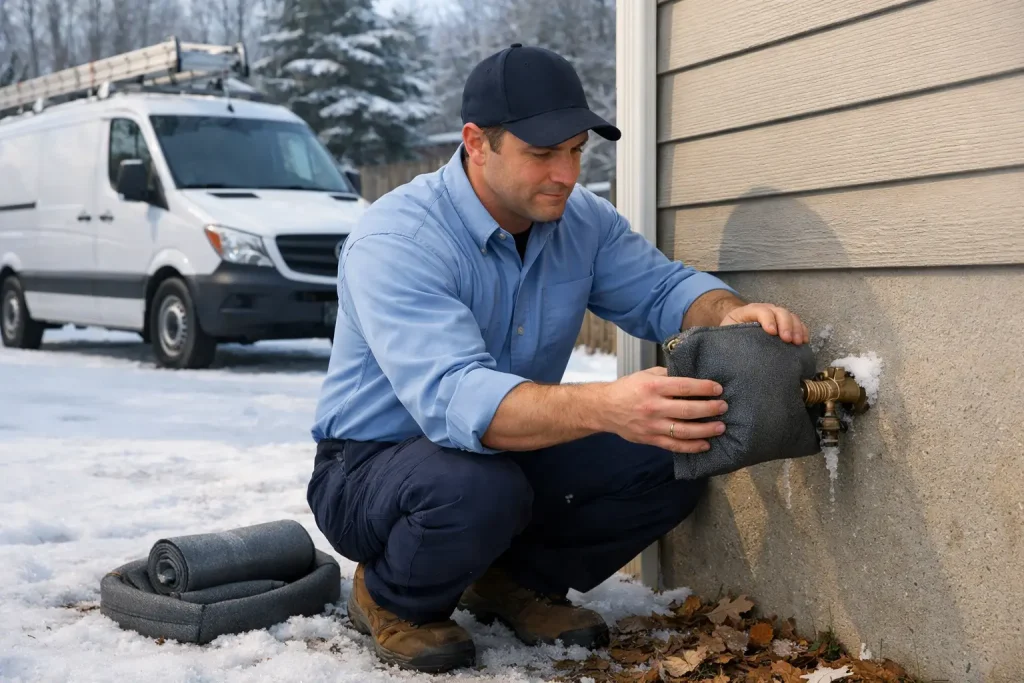
Insulated faucet covers can add a layer of protection from wind and short cold periods, especially on an older standard faucet. They are useful as a backup measure, but they are not a substitute for shutting off and draining a conventional exterior water line.
Use a cover only after the faucet has been prepared correctly. Make sure it fits securely without putting pressure on the handle or pipe. Check it after high winds, since a loose cover provides little protection.
A cover can also be helpful on a frost-free faucet in an exposed location, but remember that a hose or attachment left in place defeats the faucet’s drainage design. Removing attachments remains the more important step.
Common mistakes that lead to frozen pipes
The most common problem is leaving the garden hose connected because it is convenient for one more use. That hose can hold water in the faucet even when the temperature drops only briefly overnight.
Another mistake is shutting off the indoor valve but forgetting to open the outside faucet and interior bleeder. This leaves water in the line, exactly where it can freeze. Homeowners also sometimes close the outdoor faucet again after draining it. For a standard faucet with an interior shutoff, leaving it open is the safer choice.
Avoid using a torch, open flame, or high-heat tool to thaw a frozen faucet or pipe. Heat can damage plumbing materials, ignite nearby building materials, or create a sudden leak when ice releases. If you suspect a pipe is frozen, turn off the water supply to that section if possible and contact a qualified plumbing professional.
When to call for plumbing service
Call for help if you cannot locate the shutoff valve, the valve will not close, the exterior faucet continues to run after shutoff, or you find moisture around interior piping. A slow drip at the outdoor faucet can also point to a worn washer, cartridge, or internal valve issue that should be repaired before freezing weather.
If a faucet froze previously, do not assume it survived simply because it works now. Inspect nearby walls, ceilings, and basement areas when temperatures rise. A pressure test and targeted plumbing repair can prevent a small hidden crack from becoming a major water-damage event.
For properties with well pumps, seasonal buildings, or plumbing that runs through unheated areas, winter preparation may need to include more than the faucets. SDR Electric, Plumbing & Heating can help identify exposed plumbing and prepare the system for the conditions your property actually faces.
Set a reminder to winterize exterior faucets before the first sustained freeze, not after it. A few careful minutes while the weather is still mild can protect pipes that are much harder to reach once winter has arrived.