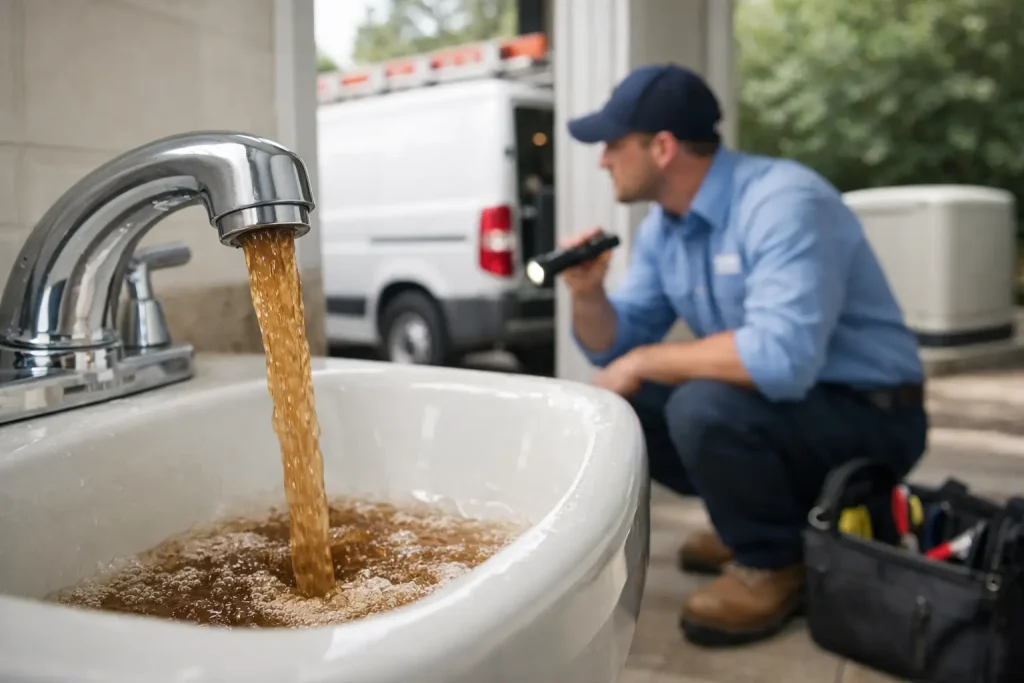
Brown water can be unsettling, especially when it appears without warning from a kitchen faucet, shower, or laundry tap. If you are asking what causes brown tap water, the answer is usually rust, sediment, or minerals that have been disturbed somewhere in the water supply or plumbing system. The cause may be temporary, but the pattern matters. Brown water throughout the home requires a different response than discoloration from one fixture or only the hot-water side.
Most brown tap water is not caused by a sudden problem with clear, clean water turning dirty inside the faucet. It is more often material that was already present in pipes, a water heater, a well system, or the municipal distribution line and has been stirred up by a change in flow or pressure.
What Causes Brown Tap Water? Start With the Pattern
Before using the water for drinking, cooking, bathing, or laundry, check where and when the discoloration appears. Run cold water briefly at more than one fixture, including a faucet closest to where water enters the home if possible. Do not run several fixtures at once, since that can make it harder to identify the source.
If brown water appears at every cold-water tap, the issue may be coming from the municipal water supply, a private well, or the main water line serving the building. If it only appears at one faucet, the problem is more likely local to that fixture, its shutoff valve, or a short section of pipe.
Brown water that occurs only when hot water is running points toward the water heater or its related plumbing. This is a useful distinction because flushing a cold-water plumbing line will not correct sediment or corrosion inside a water heater.
Common Reasons Water Turns Brown
Rust and corrosion in older pipes
Iron pipes, galvanized steel pipes, and some aging water service lines can corrode over time. Corrosion creates rust particles that settle along the inside of the piping. When water flow changes, those particles can break loose and make the water appear yellow, orange, reddish-brown, or dark brown.
A pressure change can happen after a water main repair, a temporary water shutdown, hydrant use, firefighting activity, or heavy water use in the area. In many cases, the water clears after the system settles and the affected cold-water taps are flushed. Still, recurring discoloration can be a sign that aging piping needs closer attention.
Sediment disturbed in a municipal water line
Homes on a municipal water system can experience temporary brown water after work on a water main or a change in local water demand. Sediment naturally accumulates within larger water lines over time. When flow direction or pressure shifts, that sediment may travel into service lines and household plumbing.
This type of discoloration often affects several homes nearby and may clear on its own. Contact the local water utility if the issue is widespread, severe, lasts beyond a reasonable flushing period, or is accompanied by a loss of water pressure, unusual odor, or official water-use notices.
Iron, manganese, or sediment in private well water
For homes supplied by a private well, brown water may be related to naturally occurring iron, manganese, fine sediment, or changes in groundwater conditions. Iron often creates orange or rust-colored staining in sinks, toilets, tubs, and laundry. Manganese can create darker brown or nearly black staining.
A sudden change in well water can also point to a mechanical or water-quality concern. Heavy rain, a damaged well cap, a failing pump component, sediment entering the well, or a change in the water table may all affect water clarity. If your well water has changed color, smell, or taste, avoid assuming it is only cosmetic. A qualified water test and an inspection of the well system can identify whether treatment, filtration, equipment repair, or another solution is needed.
Sediment or corrosion in the water heater
If only hot water is brown, rusty sediment inside the water heater is a likely cause. Minerals and sediment can collect at the bottom of a tank over time. The heater’s internal components can also corrode, particularly as the unit ages or if maintenance has been delayed.
Hot-water discoloration should be addressed before using that water for bathing or washing clothes. A plumbing professional can assess the condition of the tank, drain valve, supply connections, and related piping. Depending on what is found, the appropriate solution may be maintenance, repair, or replacement.
A localized fixture or plumbing issue
One brown-water faucet does not always mean the whole plumbing system is affected. Debris can collect in a faucet aerator, a cartridge, a flexible supply line, or an infrequently used branch line. Water that has been sitting in an unused bathroom, basement sink, or exterior tap line may pick up discoloration from older components.
Remove and inspect the faucet aerator only if you can do so safely and reinstall it correctly. If the water remains brown after the fixture has been flushed, or if you see reduced pressure, leaks, or visible corrosion, arrange for a plumbing assessment.
Is Brown Tap Water Safe to Use?
The appearance of brown water alone does not identify exactly what is in it. Rust particles from pipes are often a nuisance rather than an immediate health emergency, but that does not make discolored water suitable for every use. Until the source is known and the water runs clear, do not use it for drinking, cooking, making infant formula, brushing teeth, filling pet bowls, or washing light-colored laundry.
Avoid washing white clothing, towels, or delicate fabrics in brown water. Iron and manganese can leave stains that are difficult to remove. It is also wise to postpone operating appliances that rely on water, such as dishwashers, washing machines, humidifiers, and ice makers, until the issue has cleared.
If the water is brown and has a chemical smell, sewage-like odor, oily appearance, persistent cloudiness, or particles that do not clear, stop using it for consumption and contact the appropriate utility or a qualified plumbing and water-treatment professional promptly. Private well owners should consider water testing whenever there is a sudden, unexplained change in water quality.
What You Can Do Right Away
First, check whether the discoloration is on the hot side, cold side, or both. Next, ask nearby neighbors if they are seeing the same issue. That can quickly indicate whether the problem may be in the local supply rather than inside your property.
If cold water is affected and there is no boil-water advisory or instruction from the utility, run a cold tap or outside hose bib for several minutes and watch for it to clear. Use a bathtub faucet when appropriate because it has no aerator to trap debris and can handle a higher flow rate. Do not start with hot water, and do not use discolored water to fill the water heater.
If the water does not clear, keeps returning, affects only the hot side, or is accompanied by low pressure, leaks, unusual noise from a well pump, or staining around fixtures, professional troubleshooting is the safer next step. The goal is not just to restore clear water. It is to find out whether the source is a pipe, water heater, well component, filtration system, or incoming supply.
When Brown Water Needs Professional Attention
A short-lived discoloration after a known municipal water interruption may resolve with careful flushing. Ongoing or recurring brown water deserves a more complete assessment, particularly in older homes and homes with private wells. Repeated discoloration can indicate deteriorating pipe material, a water heater nearing the end of its service life, sediment problems in a well, or a water treatment system that needs service.
For property owners, the practical question is not only what makes the water look brown, but whether the condition is isolated, temporary, or part of a larger plumbing or water-quality issue. SDR Electric, Plumbing & Heating can help evaluate the plumbing and water-system side of the problem, then explain the findings in clear terms.
Clear water should be the normal standard in your home. When it is not, a few careful observations can narrow the cause quickly and help you take the right next step without guessing.