A faucet that suddenly runs dry changes the whole rhythm of a property. There is no shower, no toilet refill, no water for cooking, and no easy way to tell whether the problem is small or serious. A no water well pump repair call often starts with the same question: Is the pump failing, or has another part of the water system stopped doing its job?
The answer matters. A private well system relies on electrical power, a pump, a pressure tank, a pressure switch, plumbing connections, and the well itself. One failed component can leave the home without water, but the right repair depends on finding the actual cause safely.
Start With the Checks That Do Not Create More Problems
When there is no water at any fixture, begin by confirming that the issue affects the entire home. Try a cold-water faucet and a hot-water faucet in more than one area. If cold water is available but hot water is not, the well pump may be working and the issue may be isolated to the water heater or its plumbing.
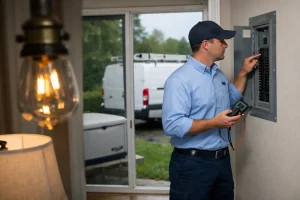
Next, check whether the electrical panel has a tripped breaker labeled for the well pump, pressure system, or pump control. A breaker can trip because of a temporary electrical issue, but it can also trip because the pump, wiring, or control equipment has developed a fault. Reset it once if it has tripped. If it trips again, leave it off and arrange qualified service. Repeatedly resetting a breaker can damage equipment and creates an electrical safety concern.
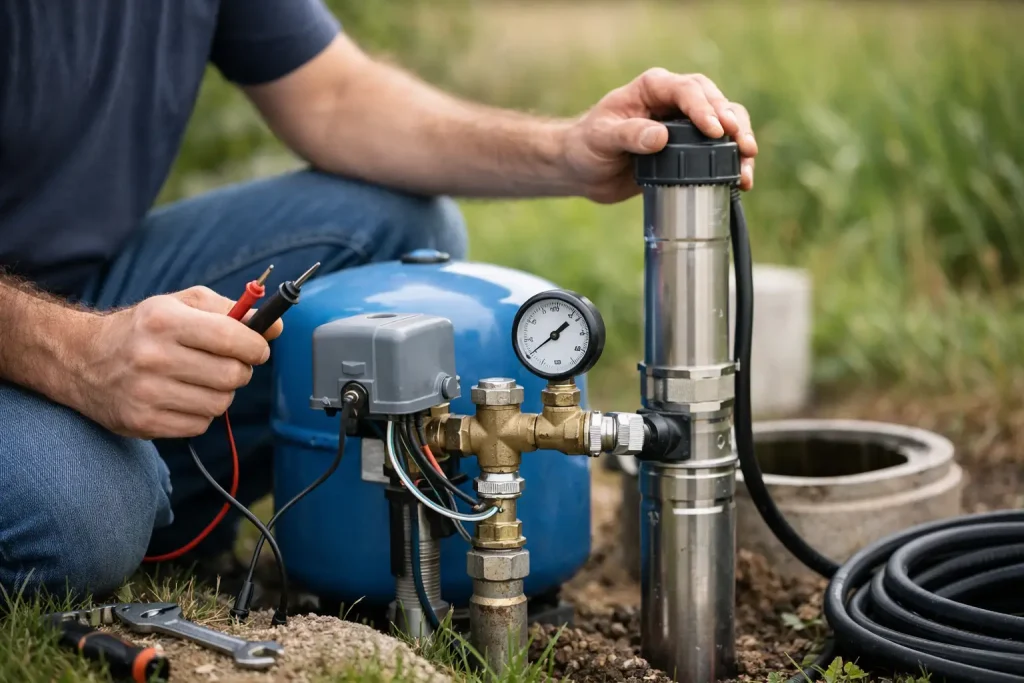
If your pressure tank has a pressure gauge, look at the reading without touching any wiring or controls. A typical private well system may cycle within a set pressure range, often around 30 to 50 psi or 40 to 60 psi. A gauge reading near zero can point to a pump, power, pressure switch, or supply problem. Pressure that remains unusually high while no water reaches fixtures may suggest a closed valve, frozen line, blocked filter, or plumbing restriction.
Do not remove a pressure-switch cover, work inside an electrical panel, or pull a well pump without the proper training and equipment. Well systems combine water, electricity, confined spaces, heavy components, and pressurized plumbing. What appears to be a simple switch issue can involve live electrical connections or a pump that has failed below ground.
Common Reasons a Well System Has No Water
A failed submersible pump is one possible cause, but it is not the only one. A proper diagnosis considers the entire system before recommending a repair or replacement.
Power or control problems
The pump needs a reliable electrical supply. A tripped breaker, damaged underground wiring, failed pump control box, loose connection, or malfunctioning pressure switch can stop the system even when the pump itself is still serviceable. These problems require electrical testing to identify where power is being lost.
Pressure switches are common service points because they respond to water pressure and tell the pump when to start and stop. Contacts can wear, debris can interfere with the pressure-sensing port, and wiring can deteriorate. The switch may click without the pump starting, or it may fail to respond at all. Because the components carry electrical current, diagnosis should be handled by a qualified technician.
A pressure tank issue
The pressure tank stores a small volume of pressurized water and helps prevent the pump from starting every time a faucet opens. If the tank loses its air charge, develops an internal bladder failure, or has a damaged connection, the pump may short-cycle or struggle to maintain pressure.
A tank problem does not always mean completely dry faucets. More often, homeowners notice rapidly changing pressure, a pump that seems to run frequently, or water that cuts out during use. Still, a major tank or connection failure can contribute to a no-water condition and should be evaluated along with the pump.
A pump or well supply issue
Submersible pumps work in a demanding environment. Over time, the motor can fail, the pump intake can become obstructed, or the drop pipe and wiring can deteriorate. Sediment, mineral buildup, and normal wear can all affect performance.
Low water levels can also be part of the problem, particularly after extended dry conditions or heavy household demand. A pump that runs without adequate water can overheat and shut down or suffer damage. In other situations, the well may recover after water use stops, creating an intermittent problem that needs careful testing rather than a quick assumption.
Frozen, blocked, or leaking plumbing
Eastern Ontario winters can create plumbing problems that look like well pump failure. If water loss follows a sharp cold spell, a frozen pipe may be restricting flow between the well equipment and the home. A clogged sediment filter, water-treatment component, or partially closed valve can also stop water from reaching fixtures.
A leak on the line between the well and house is another possibility. Depending on the location and severity, the pump may run continuously while pressure never builds. This is hard on the pump and should be addressed promptly.
What to Do While You Wait for Service
Protecting the system and the property is the priority. If the pump appears to be running continuously but no water is available, turn off power to the pump at the breaker and let the service technician know what you observed. Continuous operation can overheat a pump, especially if the well is low or a line is leaking.
Avoid using appliances that rely on water. Do not run the dishwasher, washing machine, or water heater. If the water heater is electric, turn off its breaker if there is a chance the tank may not remain full. Electric elements can burn out when energized without water around them.
During cold weather, keep the home heated and protect exposed plumbing from freezing. If the property will be vacant or the loss of water may last through freezing temperatures, professional guidance is especially useful. Water service restoration and freeze protection may need to be handled together.
It also helps to make a few notes before the technician arrives. Record when the issue began, whether pressure dropped gradually or stopped suddenly, whether a breaker tripped, and whether the pump was making unusual sounds. Mention recent power outages, construction work near buried lines, changes in water quality, or periods of unusually high water use. Those details can shorten the diagnostic process.
How Professional No Water Well Pump Repair Is Diagnosed
No water well pump repair should be based on testing, not guesswork. A qualified technician typically begins by checking system pressure, electrical supply, controls, and visible plumbing connections. The goal is to determine whether the pump is receiving the correct power and whether the system can build and hold pressure.
If testing points to the pump or down-well equipment, the next steps depend on the well configuration and condition of the existing components. Pulling a submersible pump may be necessary to inspect the pump, wiring, pipe, and fittings. A technician can also assess whether the pressure tank, switch, check valve, or water-treatment equipment needs attention at the same time.
This broader view is valuable because well water systems are connected systems. Replacing a pump without addressing a failed tank, damaged electrical connection, or clogged treatment component may not solve the underlying problem. Conversely, replacing equipment that is still working can create unnecessary disruption. The best recommendation is one that explains the fault, the repair path, and any practical steps that can help prevent a repeat failure.
When Repair Makes Sense and When Replacement Is Better
Some well pump problems are limited to a switch, wiring repair, tank adjustment, fitting, or plumbing obstruction. In these cases, targeted repair may restore reliable water service without replacing major equipment.
Replacement may be the more dependable option when a pump motor has failed, the pump has reached the end of its useful life, or pulling the well equipment reveals worn pipe, damaged wiring, or components that are likely to fail soon. The decision depends on the system’s condition, the well setup, water demand, and whether other equipment is causing strain on the pump.
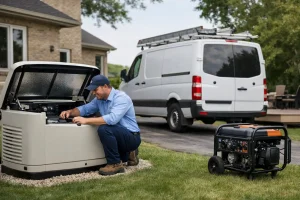
For homes planning a renovation, addition, water-treatment upgrade, or backup generator installation, this can also be a good time to review the larger system. A new pump may need to support more fixtures or different household demand than the original equipment. Coordinating electrical, plumbing, and backup-power work helps ensure the well system will perform properly during normal use and outages.
Preventing the Next No-Water Event
Not every pump failure can be predicted, but routine attention can catch warning signs early. Fluctuating pressure, frequent pump cycling, air sputtering from faucets, unusual water discoloration, and higher-than-normal sediment are all reasons to have the system checked before it stops completely.
Keep the pressure tank area accessible and dry, and avoid storing items that block access to electrical controls or plumbing shutoffs. Replace filters and maintain water-treatment equipment according to the system’s needs, since restrictions can affect pressure and pump operation. If you have a generator, confirm that it is properly sized and connected to support the well pump during an outage.
When a home has no water, the fastest path forward is a safe, methodical diagnosis. SDR Electric, Plumbing & Heating can assess the electrical and plumbing sides of a well system, explain what has failed, and help restore dependable water service without treating the pump as the only possible cause.