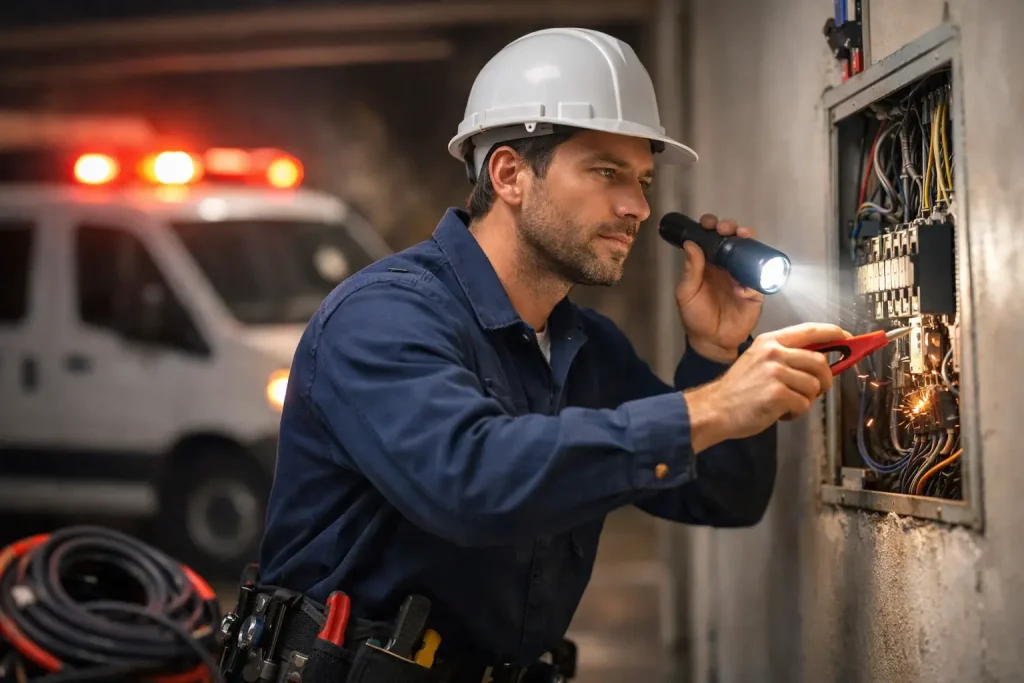
A burning odor near a panel, outlets that feel hot, or a sudden loss of power in part of your home is not a problem to troubleshoot with a quick online video. When you need an emergency electrician in Brockville, the first priority is protecting people and property while a qualified professional identifies the source of the fault.
Electrical emergencies can develop without much warning. A circuit may have been overloaded for months before a connection finally fails. Water from a plumbing leak can reach wiring. A storm can damage outdoor equipment or cause a surge that affects sensitive appliances. Knowing what requires urgent attention can help you make a calm, safe decision when something does not look, sound, or smell right.
When to Call an Emergency Electrician in Brockville
An electrical issue becomes an emergency when it presents an immediate risk of shock, fire, equipment damage, loss of essential safety systems, or damage to the building. Not every tripped breaker requires an after-hours call, but repeated trips or a breaker that will not reset deserves professional attention.
Call for urgent electrical service if you notice burning plastic, smoke, sparks, buzzing from a panel or outlet, discoloration around electrical equipment, or heat coming from switches, receptacles, cords, or the panel. These signs can point to a loose connection, overloaded circuit, damaged wiring, or a failing device. Turning the breaker off may reduce the immediate risk, but it does not correct the underlying cause.
A partial power loss can also be urgent, especially if it affects your furnace, well pump, sump pump, refrigerator, medical equipment, security system, or business operations. In rural areas around Brockville and Leeds & Grenville, a loss of power to a well pump can quickly become a no-water issue. A failed sump pump circuit during heavy rain can put a basement at risk. These are situations where electrical and mechanical systems often need to be assessed together.
Water and electricity are another serious combination. Do not touch electrical equipment that is wet, standing in water, or located near an active leak. A damaged service mast, downed wire, or storm-damaged outdoor electrical equipment should also be treated as a hazard. Keep people away from the area and contact the utility provider if public lines or meters appear affected.
What to Do Before Help Arrives
Your actions before an electrician arrives can prevent a difficult situation from becoming more dangerous. Do not remove panel covers, pull apart outlets, or attempt to repair damaged wiring yourself. Even a circuit that appears off may have energized components nearby.
If you can reach the electrical panel without entering a wet or hazardous area, turn off the affected breaker. If you are unsure which breaker controls the problem or the panel itself is hot, buzzing, wet, or showing signs of damage, leave it alone. Keep family members, tenants, customers, and pets away from the affected area.
For a fire, smoke, or an immediate threat to life, leave the building and call 911. An electrical fire should not be handled with water. For a suspected gas issue, leave the property and follow the gas utility’s emergency instructions before arranging electrical service.
When you call, be ready to describe what you see and when it started. Mention whether there has been recent storm activity, construction, a plumbing leak, a flooded basement, a power outage, or new equipment added to the circuit. This information helps the electrician arrive prepared and focus the diagnostic work.
Problems That Often Need Urgent Electrical Service
A breaker keeps tripping
A breaker trips to protect the wiring from overloads, short circuits, and ground faults. One trip after running too many appliances may be straightforward. A breaker that trips immediately after resetting, trips repeatedly, or controls equipment that is essential to the property needs further investigation.
The cause may be a damaged appliance, a loose connection, water intrusion, deteriorated wiring, or a circuit that is simply carrying more load than it was designed to handle. Older homes are particularly likely to have circuits that no longer match how the space is used today. A finished basement, home office, workshop, electric vehicle charger, or renovated kitchen can change electrical demands significantly.
Flickering lights or unusual outlet behavior
Flickering lights are sometimes caused by a loose bulb, but widespread flickering, lights that brighten and dim, or outlets that stop working can indicate a larger issue. Problems with a neutral connection, service equipment, panel components, or branch wiring can cause inconsistent power. These conditions can damage electronics and create a heat hazard if ignored.
Pay close attention if lights change brightness when a large appliance starts, such as a heat pump, dryer, well pump, or refrigerator. The electrician may need to assess the appliance circuit, panel capacity, connections, and the incoming electrical service. The right repair depends on where the voltage issue originates.
A wet panel, flooded space, or plumbing leak near wiring
Electrical equipment exposed to water should be inspected before it is placed back into service. Moisture can corrode connections, compromise insulation, and leave behind damage that is not visible from the outside. This is especially relevant after a sump pump failure, burst pipe, appliance leak, roof leak, or basement flood.
A coordinated contractor can be valuable in this situation because the water source and the electrical damage may be connected. The leak needs to be stopped, the area made safe, and affected electrical components assessed before normal operation resumes. SDR Electric, Plumbing & Heating Inc. can coordinate those related service needs instead of leaving you to arrange separate trades during a stressful repair.
No power to a well pump, sump pump, or heating equipment
When essential equipment loses power, the best response depends on whether the failure is electrical, mechanical, or both. A well pump may have an electrical supply issue, a failed pressure switch, a pump problem, or a control issue. A furnace or heat pump may lose power because of a tripped breaker, but the cause could also be within the unit.
Avoid repeatedly resetting breakers to force equipment back on. Repeated resets can worsen damage if there is a short circuit or failing motor. An electrician can test the circuit and connections safely, then determine whether another trade or a combined repair approach is required.
What a Qualified Electrician Will Check
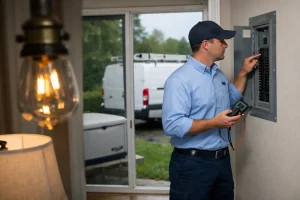
Emergency electrical work is not guesswork. A licensed electrician starts by making the area safe, then traces the problem through the circuit, equipment, panel, and service as needed. That may include testing breakers, checking voltage, inspecting connections for heat damage, looking for water intrusion, and confirming that grounding and bonding are functioning correctly.
The repair may be as focused as replacing a damaged receptacle or correcting a loose connection. In other cases, the proper solution may involve a new dedicated circuit, panel repair, service upgrade, replacement of damaged outdoor equipment, or correction of wiring that no longer meets the needs of the property. A practical recommendation should explain the immediate repair, the reason it failed, and any upgrade that would prevent a repeat problem.
For commercial properties, electrical emergencies can affect refrigeration, point-of-sale systems, lighting, production equipment, tenant spaces, and life-safety functions. The priority is to restore safe operation while documenting the issue clearly for owners, property managers, or contractors. Temporary measures may sometimes be appropriate, but only when they are safe and followed by a planned permanent repair.
Avoid the Quick Fix That Creates a Bigger Problem
Extension cords, power bars, oversized breakers, and repeated breaker resets are common attempts to keep things running. They can also hide the warning signs of an overloaded or damaged circuit. A breaker should never be replaced with a larger size simply to stop nuisance trips unless the wiring, load, and equipment have been properly evaluated.
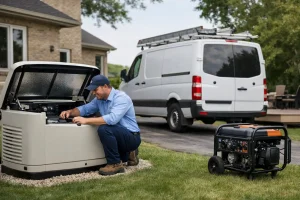
The same applies to generators. A portable generator must be connected safely, with the correct transfer equipment where required. Feeding power backward through a receptacle is dangerous for occupants, the home, and utility workers. If outages are a recurring concern, a professionally planned backup-power system can keep critical loads such as heat, refrigeration, well pumps, sump pumps, and selected lighting operating safely.
Plan the Repair After the Emergency
Once the immediate hazard is corrected, take the opportunity to ask what would make the system more dependable. The answer may be simple, such as replacing worn devices or moving a high-load appliance to its own circuit. It may also involve panel capacity, surge protection, outdoor receptacles, generator readiness, or electrical planning for a renovation.
The most useful emergency call does more than get the lights back on. It gives you a clear picture of what failed, what was repaired, and what your property needs to stay safe the next time weather, water, age, or added electrical demand puts the system under pressure.